



Union Minister for Youth Affairs and Sports, Dr. Mansukh Mandaviya, on Friday outlined India’s commitment to clean sport and stronger global cooperation while addressing the inaugural session of the World Anti-Doping Agency’s Global Anti-Doping Intelligence & Investigations Network conference.
Speaking at the event, the minister emphasised the importance of coordinated international action, stating that “a global anti-doping intelligence and investigations network can play an important role in strengthening cooperation in these critical areas.”
He noted that doping has evolved beyond individual misconduct into a coordinated global operation. “Doping today is no longer an individual act of misconduct, but an organised multinational enterprise,” he said, underlining the need for a unified response.
Dr. Mandaviya highlighted India’s recent policy measures, saying reforms were undertaken “not just for compliance, but with a genuine commitment to the integrity of sports.” He pointed to the National Anti-Doping Act, 2022 as a key legal framework and said the National Anti-Doping Amendment Act, 2025 aligns domestic regulations with global standards.
He added that the government is considering criminal provisions against those involved in administering or trafficking banned substances.
Global Partnerships Key to Anti-Doping Efforts
WADA President Witold Bańka stressed the importance of collaboration between anti-doping agencies and law enforcement.
“WADA’s Intelligence and Investigations model has evolved to strengthen cooperation between National Anti-Doping Organizations and law enforcement agencies,” he said.
“This model is built on partnerships. It brings together the expertise of anti-doping professionals with the capabilities of law enforcement, supported by international partners such as Europol and INTERPOL,” he added.
India Expands Testing and Enforcement
The minister said India has significantly expanded its anti-doping testing capacity, increasing from around 4,000 tests in 2019 to approximately 8,000 in the past year.
He also reported a decline in adverse analytical findings, from 5.6 percent in 2019 to less than 2 percent currently, attributing the drop to sustained awareness and preventive measures.


Shri Anant Kumar, Director General of the National Anti-Doping Agency, said, “Our testing programme has expanded significantly in recent years, complemented by a strategic shift towards risk-based and effectiveness-driven approaches.”
“However, as we recognise, testing alone is no longer sufficient, and integration, intelligence, and education must form the core of our anti-doping framework,” he added.
Focus on Prevention and Athlete Awareness
Dr. Mandaviya stressed that prevention remains central to anti-doping efforts.
“Prevention remains the most effective strategy,” he said, adding that “providing the right information at the right time empowers athletes to make informed decisions and avoid both intentional and accidental violations.”
He said the National Anti-Doping Agency has adopted a multi-layered awareness approach, including workshops, seminars, digital campaigns, and event-based learning. Special education modules have also been developed for athletes with disabilities.
The minister also highlighted the “Know Your Medicine” mobile application, which allows athletes to verify whether medicines contain prohibited substances.
Institutional Strengthening and Technology Push
Shri Hari Ranjan Rao, Secretary (Sports), said the government has strengthened institutional capacity and coordination with enforcement agencies.
“The Ministry of Sports has worked towards strengthening the institutional and investigative capacity of the National Anti-Doping Agency, including closer coordination with enforcement agencies and improved information sharing,” he said.
He added that partnerships with bodies such as the Food Safety and Standards Authority of India and the Central Drugs Standard Control Organisation are crucial in tackling risks from contaminated or unregulated substances.
The minister said India is also working to establish new WADA-compliant drug testing laboratories to meet growing demand.
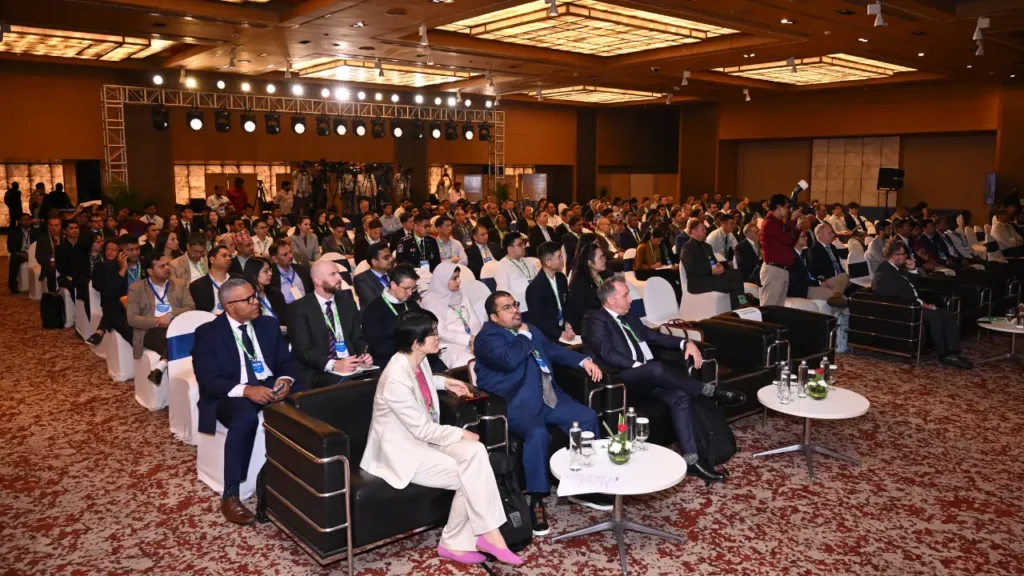 © PIB
© PIBSporting Integrity at the Core
Dr. Mandaviya reiterated that ethical values must remain central to sport.
“Athlete values must remain at the core of sporting excellence,” he said, adding that “sports has the power to foster discipline, integrity, and character, but rising competitive pressures can sometimes lead to unethical choices.”
He also underlined India’s broader ambition in sports, stating that the country is “emerging as a global sporting powerhouse with both direction and momentum.”
Concluding his address, the minister said, “No single entity can address the challenge of doping in isolation,” stressing the need for partnerships between governments, regulators, and sporting bodies.
Leave a Reply