



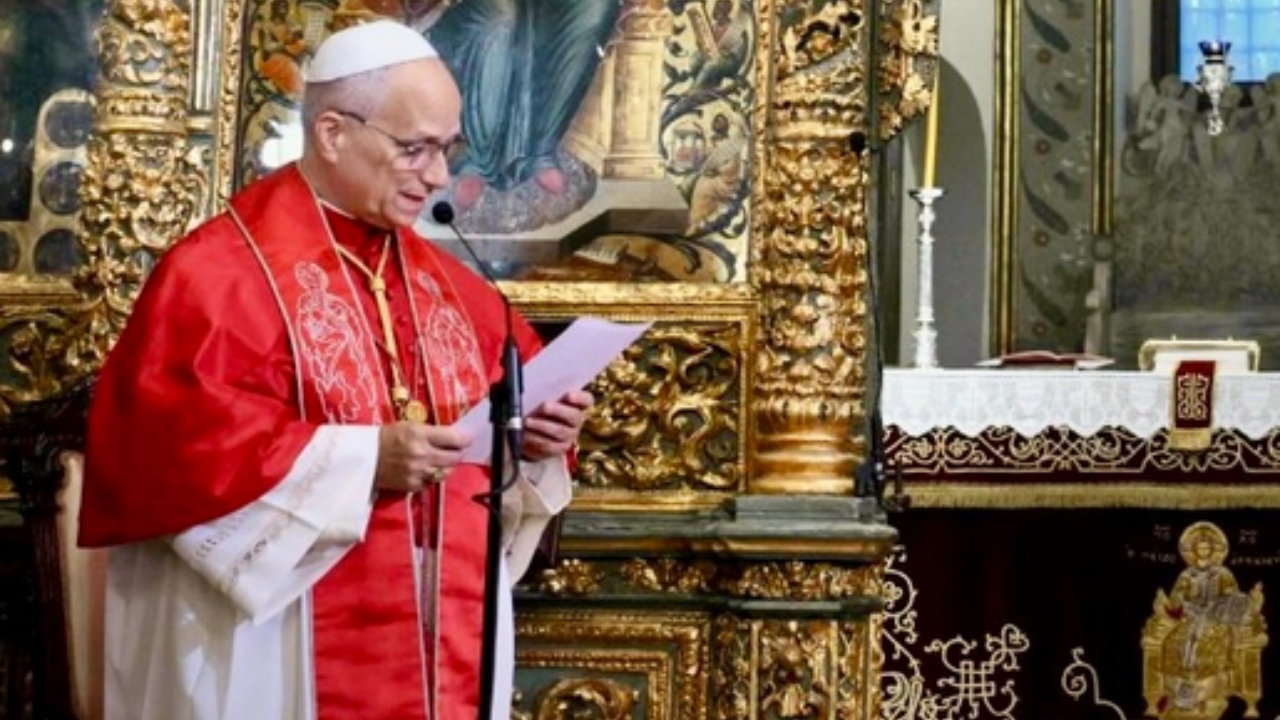
On the final leg of his 11-day apostolic journey across Africa, Pope Leo XIV on Tuesday issued a strong condemnation of what he termed “resource colonisation,” linking the global scramble for oil and critical minerals directly to the proliferation of armed conflicts.
Speaking from the presidential palace in Malabo, the American-born pontiff delivered a message that extended beyond Equatorial Guinea, criticising an “extractive logic” that treats human life as a commodity.
Addressing civil authorities and diplomats, Pope Leo XIV pointed to the paradox of resource-rich nations remaining trapped in poverty and violence. He warned that rapid technological advancements have intensified speculation on raw materials, often at the cost of local communities and public health.
Echoing remarks made earlier in Cameroon, the Pope said those who “rob the land of its resources” frequently reinvest profits into weaponry, perpetuating “an endless cycle of destabilisation and death.”
“Armed conflicts are increasingly tied to the exploitation of oil and mineral reserves… occurring with no regard for international law or the self-determination of peoples,” said Pope Leo XIV.
The visit comes amid growing geopolitical competition between major global powers for Africa’s critical minerals. Without naming specific countries, the pontiff called for a “decisive change of course,” urging leaders to prioritise the common good over corporate interests.
He also paid tribute to his predecessor, Pope Francis, marking the first anniversary of his death. Recalling Francis’s warning, Leo said, “Today we also have to say ‘thou shalt not’ to an economy of exclusion and inequality. Such an economy kills.”
Throughout his African tour, which included stops in Algeria, Cameroon and Angola, Pope Leo XIV has consistently advocated for “unarmed and disarming peace.”
During meetings with long-serving leaders, including Equatorial Guinea President Teodoro Obiang Nguema Mbasogo, the Pope stressed the need for governance that acts as a “bridge” rather than a source of division. He warned that corruption “disfigures authority.”
As he prepares to return to the Vatican, his remarks highlight increasing tensions between the Holy See and global powers over the ethics of modern warfare and the environmental impact of the energy transition.
Recent geopolitical developments have underscored these concerns. Conflicts and policy decisions involving resource-rich regions — including developments in Venezuela, West Asia and Ukraine — have placed mineral wealth and energy supply at the centre of global contestations.
The Pope further cautioned that technological progress is often directed toward warfare rather than expanding opportunities for all.
“These same technologies often appear to be conceived and utilised primarily for warlike purposes, within contexts that fail to expand opportunities for all. On the contrary, the destiny of humanity risks being tragically compromised without a change of direction in the assumption of political responsibility and without respect for institutions and international agreements.”
Emphasising the moral dimension, he said religion must never be used to justify violence. “God’s name must not be profaned… above all, it must never be invoked to justify choices and actions of death,” he added.
He concluded by calling for an “educational pact” to empower Africa’s youth with new perspectives and the courage to engage in politics that prioritises justice over domination.
Leave a Reply