



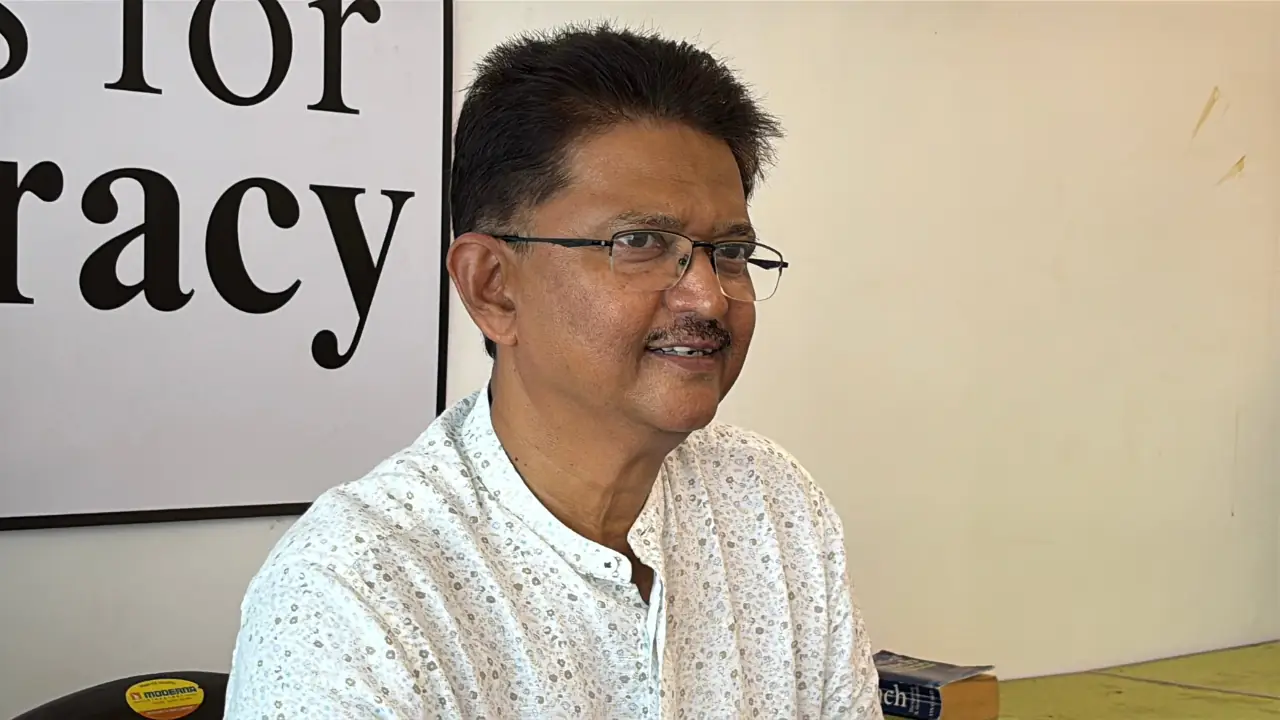
Citizens for Democracy (CFD) Goa on Wednesday accused the State Government and the State Election Commission (SEC) of deliberately delaying municipal elections across Goa, alleging that the move was driven by political convenience and violated constitutional provisions.
Addressing the media, CFD Convenor Elvis Gomes said the conduct of the authorities reflected a “dual standard” in governance. He pointed to what he described as “overzeal” in conducting the Corporation of the City of Panaji (CCP) elections earlier, allegedly using a defunct electoral roll despite the availability of the Special Intensive Revision (SIR) final roll and before the expiry of the Corporation’s term.
Gomes stated that such actions were in direct violation of Article 243U of the Constitution, which mandates that elections to municipalities must be completed before the end of their five-year term. He also referred to the 2022 judgment in the Sandeep Vazarkar case, which, he said, had clearly upheld this requirement.




He further criticised the appointment of administrators in place of elected representatives, calling it a subversion of local self-governance. According to Gomes, democratic processes cannot be kept in abeyance at the discretion of constitutional bodies.
Citing multiple rulings of the Goa Bench of the Bombay High Court, including cases involving Naresh Gaunekar, Joseph Sequeira, Rohan Shirodkar and Sandeep Vazarkar, Gomes said the judiciary had consistently held that the State Election Commission must function independently and cannot delay elections indefinitely due to administrative or political reasons.
He added that the Supreme Court, in the Kishansing Tomar case, had underscored the constitutional mandate to conduct local body elections within the stipulated timeframe, emphasising that regular and timely elections are essential to democratic governance.
Gomes also expressed concern over what he termed a lack of public response to the issue, stating that repeated delays could set a precedent affecting future elections. He further alleged that similar patterns were seen earlier in matters related to reservation for women, where the government’s stance was eventually struck down by the courts.
Leave a Reply