


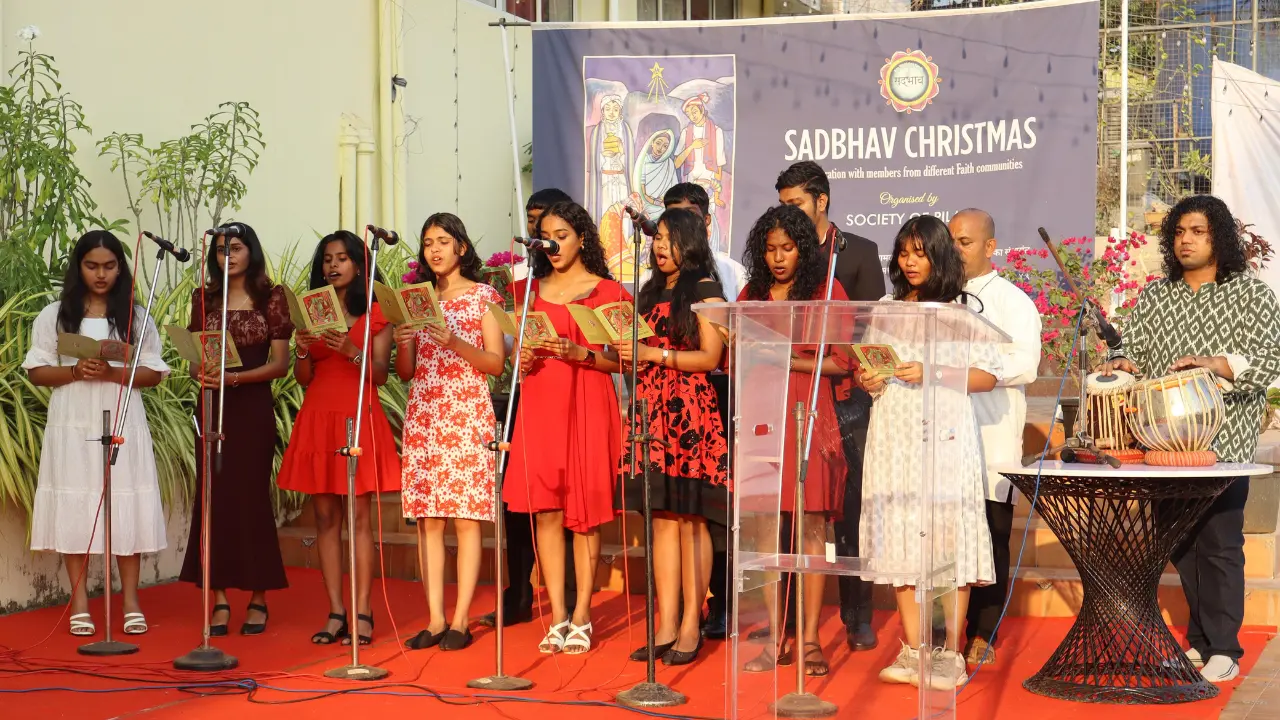
In the backdrop of rising communal tensions in Goa, Sneh Sangam, a celebration of festivals, was organised by Sadbhav, an initiative of the Society of Pilar aimed at fostering interreligious dialogue. The event was held on Buddha Poornima, May 1, 2026, at the Pilar Pilgrim Centre, with a clear message—reaffirming coexistence, tolerance, and mutual respect.
The gathering brought together representatives and participants from multiple faiths, including Hinduism, Christianity, Islam, Sikhism, Buddhism, Zoroastrianism, and Jainism. The programme opened with a symbolic act of unity, as members from each faith collectively watered a plant—an act underscoring shared responsibility towards peace and harmony.
Shiren Sidwa of the Zoroastrian community said, “It was a wonderful opportunity to partake in an event bringing diverse communities together at a time when there’s so much communal tensions in Goa.”
Cultural performances formed a significant part of the event. Parvesh Java led a 30-member Stuti choral ensemble in rendering Zoroastrian prayers “Yatha Ahu Vairyo” and “Ashem Vohu” in the ancient Avestan language, emphasising truth and good thoughts as pathways to happiness.

Nasima Saidrakhmonova, a Goa University student from Tajikistan, performed the traditional Badakhshani dance associated with Nowruz celebrations. Reflecting on her participation, she said, “I truly enjoyed presenting the Badakshani dance and sharing a part of my culture with everyone. The warmth and appreciation from the audience made it even more special.” She added, “Festivals, no matter what the religion, are a celebration of life.”

Dr. Ida Mukherjee, a certified Christian counsellor, spoke on the theme “Festivals and Food,” highlighting how food becomes “a symbol of love, hospitality, and togetherness.” She noted, “The hall held a quiet dignity – no single tradition dominated; every voice was honoured. Conversations flowed easily, and the very air seemed to say: ‘You belong here.’”
Shoaib Shaikh, Director of Goa College of Skill Development, emphasised the role of festivals in strengthening social bonds. He said festivals are “opportunities to come together, to share joy, and to strengthen the bonds of fraternity among us.”
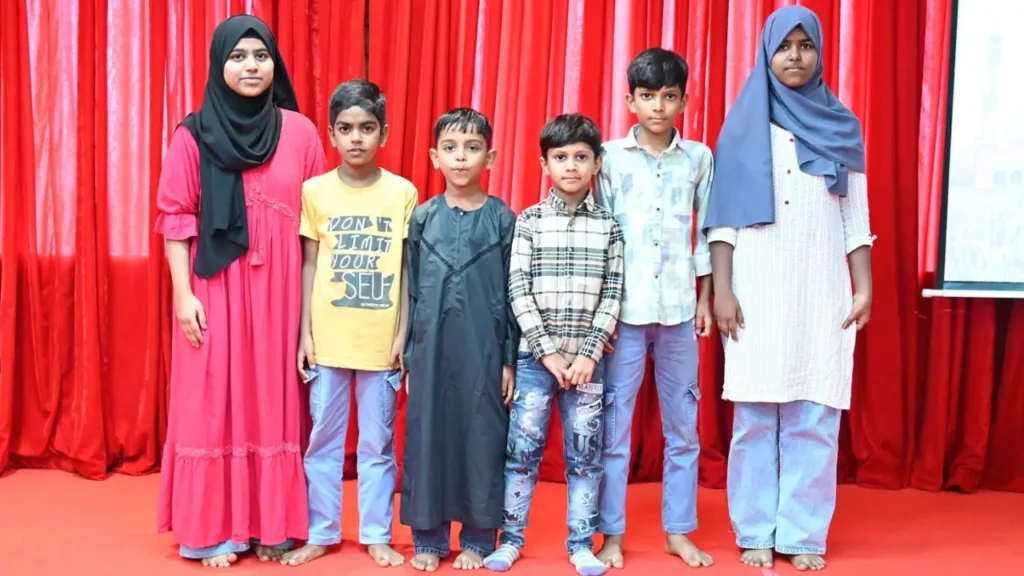
The programme featured performances across communities, including a skit titled The Bridge of Al Amanah by students from the Muslim community, highlighting trust as a unifying force. Children from the Jain community presented a devotional dance invocation. Musical performances included “Hallelujah” by Imenda Afonso, “Deva Mhojea Deva” by Custodio Dias, and “Golden Peace” by Fr. Jerry. Fr. Elvis Fernandes, convenor of Sadbhav, rendered “Humko Man ki Shakti Dena,” while Cayden Miranda and Cladwyn Miranda performed an instrumental piece, Rewrite the Stars.
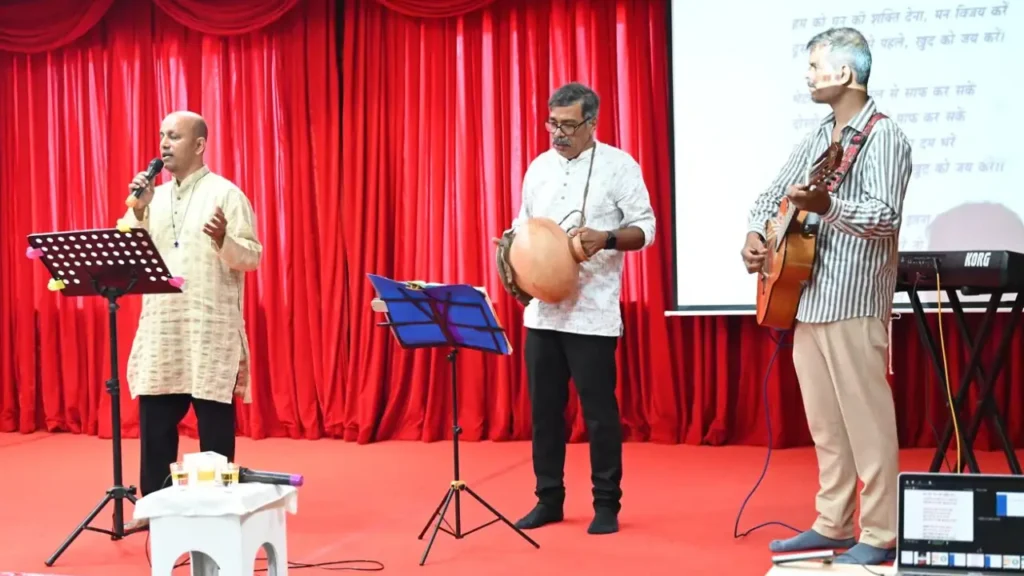
Rajesh Chedda of the Jain community remarked, “It keeps getting better, and the bonhomie observed amongst the community members was heartening.”
The event concluded with an interfaith prayer led by Assistant Prof. Jisha Poonachan. Participants also shared a communal meal featuring dishes from various traditions, reinforcing the spirit of unity. Prof. Bhamra noted that such shared experiences “strengthen interpersonal bonds,” while Dr. Mukherjee added, “We tasted many traditions, but the flavour was one: affection.”
Shubhankar Shah, assistant professor at Chowgule College, described the gathering as a necessary cultural exchange, stating that “different religions are, in fact, a bonding agent for the entire community to come together and celebrate peace and love instead of hostility and suspicion.”
Participants expressed appreciation for the initiative. Rupashi, a Buddhist attendee, said, “It was fantastic to listen to the talented artists and witness the most beautiful people coming together to show the path of peaceful coexistence.”
Leave a Reply