



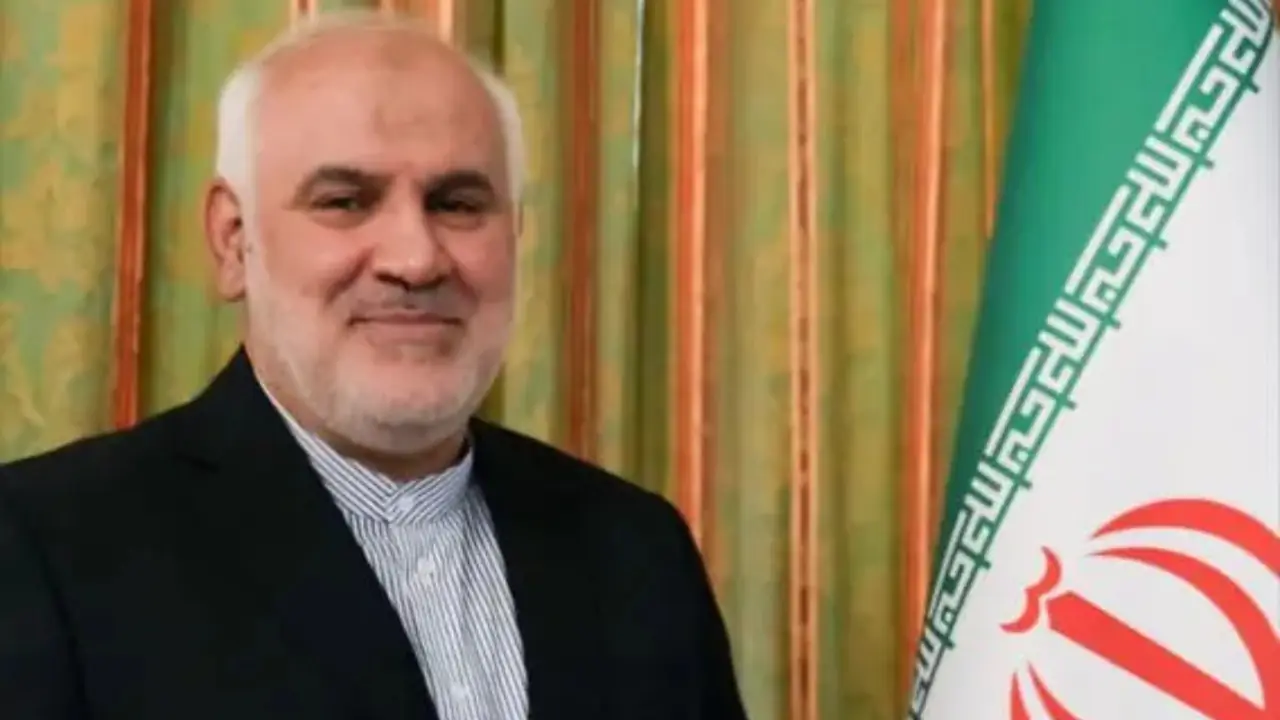
Iran’s Ambassador to India, Mohammad Fathali, has warned that the ongoing regional conflict could significantly disrupt global energy markets, cautioning that fuel prices are likely to rise in the near future.
Speaking on the evolving situation, the envoy said Tehran is prepared for all scenarios. “Our high-ranking officials have announced that we are ready for any option, and I think these conflicts disturb everything, and you can see the price of petroleum in the near future. Unfortunately, the Zionist regime wants to drag the United States into this conflict,” Fathali said.
Addressing concerns over maritime security in one of the world’s most critical energy corridors, he indicated that Iran is working on a framework to ensure safe navigation. “The Iranian side said that in the near future, we will announce a mechanism for passing or safe passage through the Strait of Hormuz,” he noted.
The remarks come amid a sharp escalation in tensions after the United States announced a naval blockade targeting vessels entering or exiting the Strait of Hormuz. The decision followed the collapse of negotiations between American and Iranian delegations.
Announcing the move, US President Donald Trump said, “Effective immediately, the United States Navy, the finest in the world, will begin the process of BLOCKADING any and all ships trying to enter or leave the Strait of Hormuz.”
He added that US forces would identify and board ships suspected of making payments to Iran for transit. “No one who pays an illegal toll will have safe passage on the high seas,” Trump said.


The President also issued a warning to Iranian forces, stating that any attack on American or civilian vessels would be met with overwhelming force. He said the US military was “LOCKED AND LOADED” to eliminate remaining Iranian military capabilities.
US Central Command later clarified that the blockade specifically targets vessels linked to Iranian ports and confirmed that enforcement began at 10 am ET on Monday, April 13.
Meanwhile, Fathali said Iran remains open to negotiations but only under conditions that recognise its rights. “Our high-ranking officials and delegations said that we are ready for peace. We are ready for negotiation. But you should know that, and you should be aware that Iran is also ready for war,” he said.
On the possibility of further talks, he added, “We have formally and officially announced that if they (US) accept our conditions, it is predictable that we will have another negotiation.”
The envoy also warned that a US blockade of the Strait of Hormuz would violate international law and global norms. He reiterated that Iran would keep the strait open for friendly nations, including India.
Expressing gratitude to India, Fathali said, “I want to thank the Indian people. They have demonstrated that they are truly reliable and compassionate in times of hardship.”
He also alleged that recent attacks had caused extensive damage to civilian infrastructure, including hospitals and schools. “They attacked us for 12 days, and after that, they accepted a ceasefire. And they announced that we were on the negotiation table. And after that, they attack us. They attacked our infrastructure—schools and hospitals. This Strait is our territorial waters,” he said.
Highlighting the long-standing sanctions imposed on Iran, he said, “You know that we have been imposed with more than four decades of different kinds of sanctions. At the first time they announced a unilateral sanction, and after that, crippling sanction, and after that, small sanction, and now announce maximum pressure sanction.”
Despite these measures, he said Iran had focused on self-reliance under the guidance of its leadership, particularly in strengthening domestic production capabilities.
Leave a Reply