



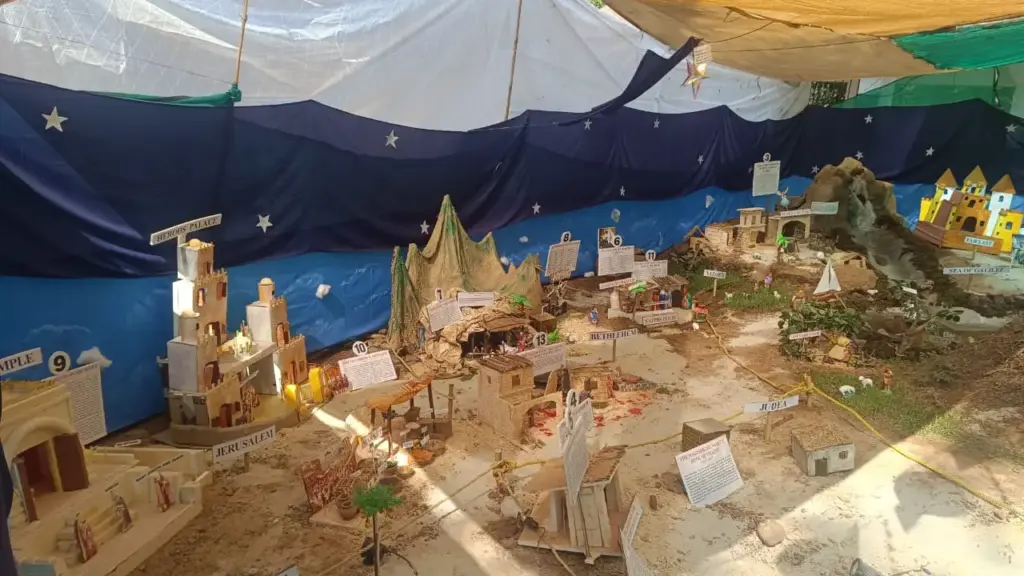
A rare and meticulously researched Christmas crib in the Igramoll area of Quepem is drawing visitors for its in-depth portrayal of the birth of Jesus Christ, presented with historical, geographical and scriptural context rarely seen in traditional Nativity displays.
Spanning an impressive 12 metres, the crib presents the Nativity story in chronological order, supported by biblical references, maps, historical explanations and detailed footnotes. The project was prepared under the leadership and guidance of Milson Goes of Igramoll, following nearly 45 days of dedicated work by a six-member team.

One of the key highlights of the display is its detailed depiction of the journey of the Magi. Goes explains that the distance from ancient Babylon, near present-day Baghdad, to Bethlehem was approximately 800 to over 900 miles, a journey that would have taken several months along established trade routes through the Fertile Crescent to Jerusalem and onward to Bethlehem. Based on this understanding, the crib suggests that the Wise Men likely travelled largely at night, guided by the star.



Drawing from biblical study, Goes notes that while Christian tradition assigns the names Caspar, Melchior and Balthazar to the Wise Men, the Gospel of Matthew refers only to “Magi” and does not specify either their number or their names. He points out that the tradition of three wise men is derived from the three gifts mentioned in scripture—gold, frankincense and myrrh.
Another notable feature is the crib’s interpretation of the offering made by Joseph and Mary. According to Goes, the sacrifice of turtle-doves or pigeons described in the Gospel of Luke reflects the offering of the poor, indicating that the visit of the Magi likely occurred after this ritual sacrifice and not before.
Having personally visited the holy sites associated with the birth of Christ, Goes has also ensured historical accuracy in the depiction of key structures. Herod’s Palace and Herod’s Temple are shown as separate buildings, while the display also includes the house of Mary, the house of Joseph and Joseph’s carpentry workshop.
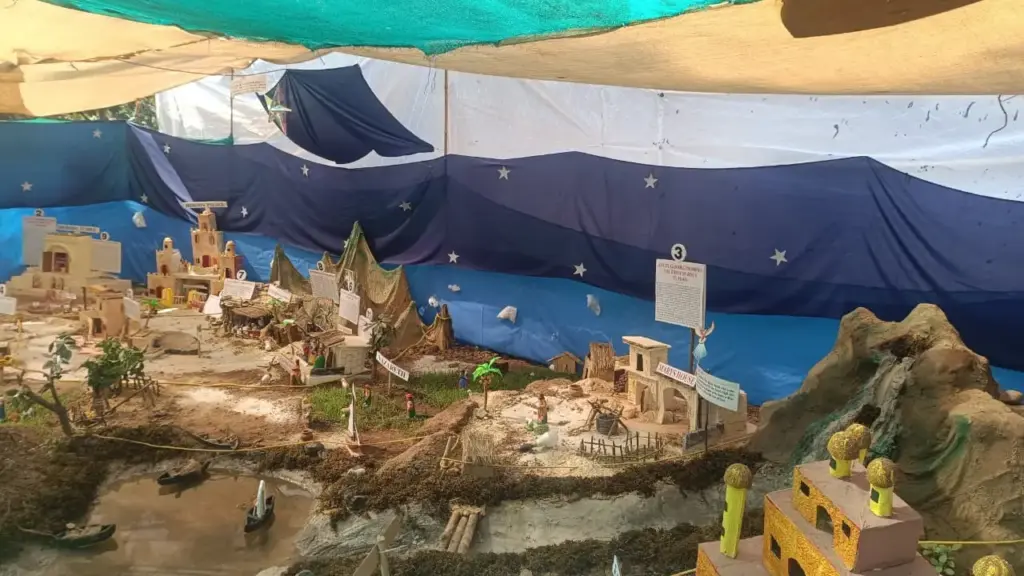
The crib further features important regions and locations such as Jerusalem, Judea, Egypt and the Sea of Galilee, along with representations of local markets, festivals, animals and sacrificial practices common in Israel at the time.
Visitors have praised the installation for combining visual storytelling with education and faith. Summing up the intent behind the project, Goes said the crib was conceived as more than a festive decoration, describing it as a visual catechism that places scripture, geography and history side by side to help people understand the Nativity.
Leave a Reply