



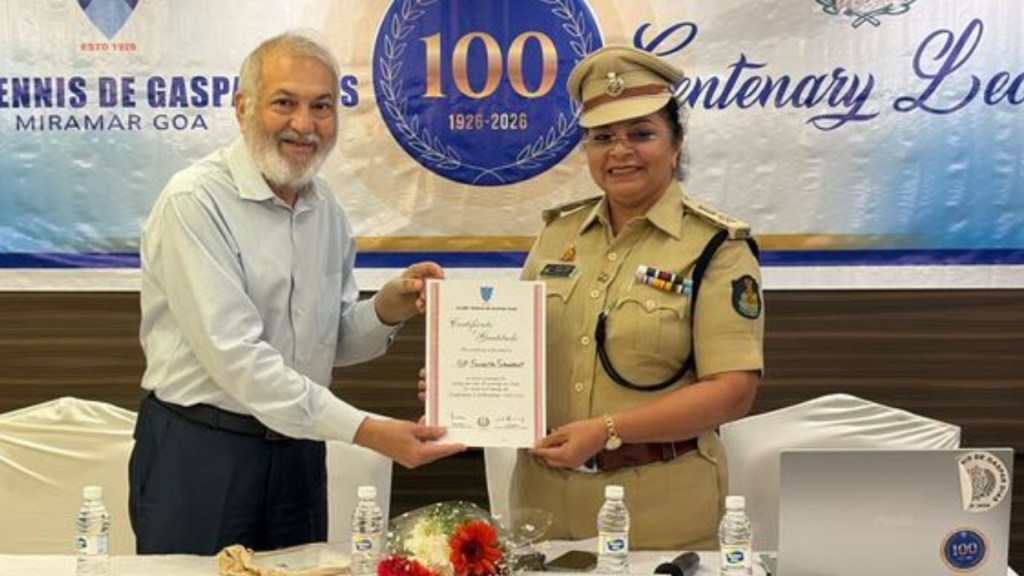
Social media’s rapid information flow has significantly replaced the traditional role of the khabri or police informer, said Superintendent of Police Sunita Sawant during a lecture at Clube Tennis de Gaspar Dias’ centenary series in Panaji. Sawant, one of Goa Police’s senior-most women officers, said the shift has altered how information is gathered, verified and used to maintain law and order.
She explained that in earlier years, a khabri was a trusted source who quietly observed village movements, allowing police to verify intelligence discreetly and maintain community confidence. “The public had confidence in the police and information flowed both ways, quietly and responsibly,” Sawant said in her talk titled Police and Public: Expectations and Responsibilities.
Sawant noted that today, unverified information spreads instantly through social media, often creating confusion or even escalating into law and order challenges. “The concern is that this information is often neither verified nor responsible. Rumours circulate easily and sometimes even escalate into aggression,” she said, urging the public to steer clear of misinformation.



She added that any police–khabri relationship must be rooted in integrity and aligned with the Constitution and societal interest, not personal gain.
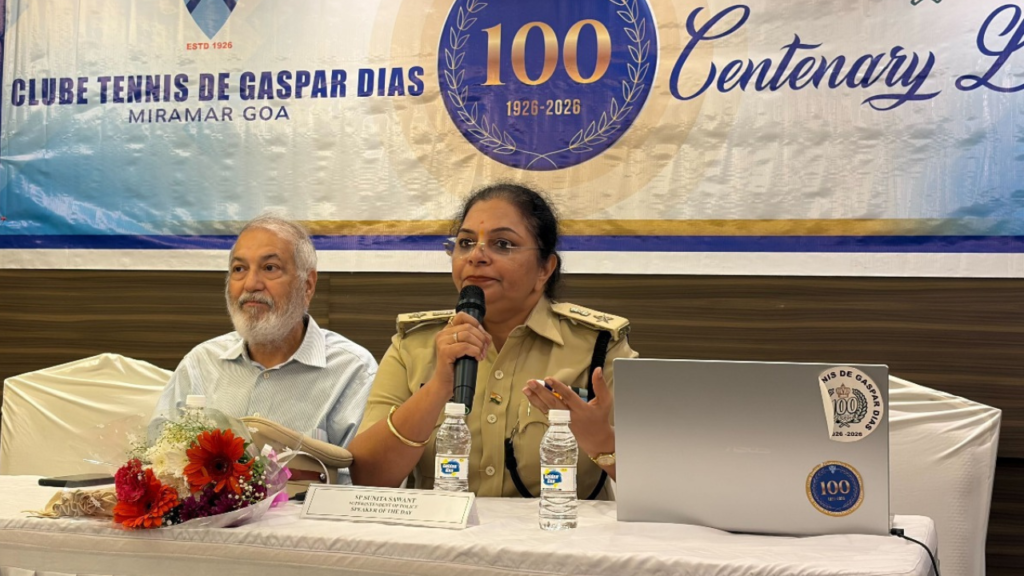
Sawant emphasised that policing cannot rely on enforcement alone and depends on public cooperation. “Safety emerges when people share vigilance and civic responsibility. Police are first responders, but public cooperation prevents crimes even before they occur,” she said.
During her address, Sawant recalled two cases that shaped her approach to policing. One was Goa’s first human trafficking case in 2009, in which a rescued minor’s testimony helped secure convictions across India and Bangladesh. Another was a missing medical student case—years later, the student contacted Sawant as a doctor to seek blessings before her wedding, a gesture the officer said reaffirmed the human aspect of policing.
Sawant also highlighted Goa Police’s investment in future-ready policing, including commando and anti-terror training, disaster response preparedness, improved investigation standards and digital outreach through platforms like YouTube and WhatsApp. “Modern policing anticipates risk. We must adapt to social change and support communities long before wrongdoing occurs,” she said.
Leave a Reply