



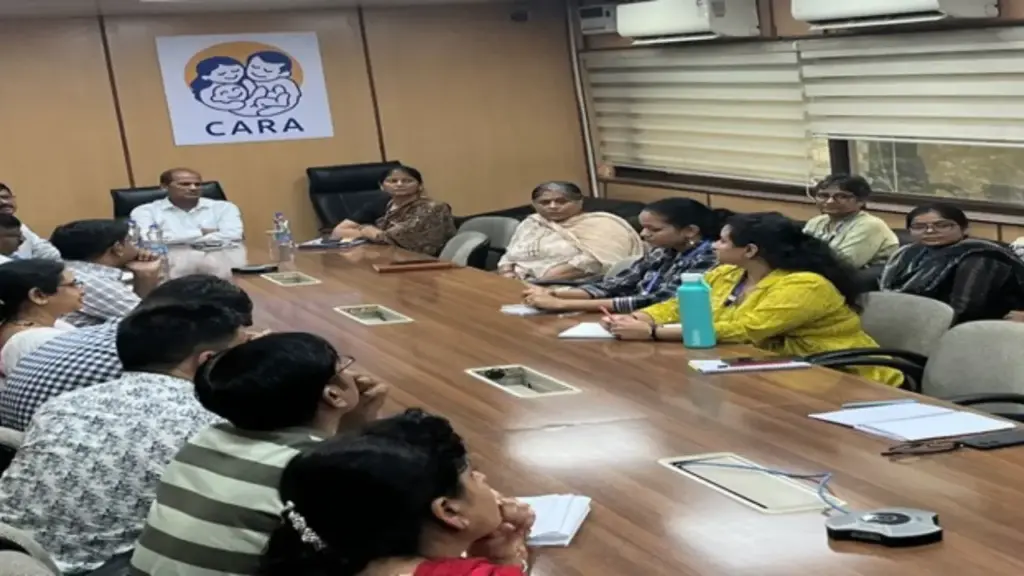
The Central Adoption Resource Authority (CARA), a statutory body under the Ministry of Women and Child Development, Government of India, has issued three Office Memorandums to State Adoption Resource Agencies (SARAs) across states and Union Territories to reinforce compliance with adoption procedures, ensure preservation of adoptee records, and protect the identity of children.
The directions have been issued under the provisions of the Juvenile Justice (Care and Protection of Children) Act, 2015, as amended in 2021, and the Adoption Regulations, 2022.
Adoption under the Juvenile Justice Act is intended to secure the right to family for orphaned, abandoned and surrendered children, as provided under Section 56(1) of the Act.
In the first Office Memorandum, CARA reiterated the mandatory observance of statutory procedures and timelines before declaring a child legally free for adoption. The authority clarified that no orphan or abandoned child can be declared legally free for adoption without completion of due inquiry, efforts to trace biological parents, restoration attempts, and other statutory requirements within the prescribed timeframe.
In cases of surrendered children, CARA emphasised that the mandatory reconsideration period of two months must be followed before a child can be declared legally free for adoption.
Through a second Office Memorandum, the authority issued policy clarification regarding the safekeeping, maintenance and transfer of records of children and adoptees. The move comes in response to difficulties faced by adult adoptees seeking information about their origins through the root search process provided under Regulation 47(2) of the Adoption Regulations, 2022.



CARA noted that in some cases records are unavailable because the concerned Specialised Adoption Agency or Child Care Institution has been closed, de-registered, merged or had its functions transferred to another institution.
The authority reiterated that the responsibility to preserve and safeguard records continues regardless of the operational status of the institution. States and Union Territories have been asked to ensure that all physical and digital records are securely preserved and transferred to the designated authority or institution.
Authorities have also been directed to make arrangements for the long-term safekeeping of records to facilitate root search requests by adoptees in the future. CARA emphasised that records must not be destroyed, discarded or rendered inaccessible except in accordance with procedures prescribed by law. These provisions are aligned with Section 99 of the Juvenile Justice Act, which mandates confidentiality of reports and records relating to children.
In a third Office Memorandum, CARA directed states and Union Territories to ensure strict compliance with Section 74 of the Juvenile Justice Act, which prohibits disclosure of the identity of children in conflict with law or children in need of care and protection.
States have been instructed to ensure that photographs, videos or identifying details of children residing in Specialised Adoption Agencies or Child Care Institutions are not disclosed through any form of communication, including social media.
Authorities have also been advised to take appropriate action in cases of violations and to sensitise officials and staff about confidentiality requirements and the penal consequences provided under Section 74(3) of the Act.
CARA stated that the measures aim to strengthen transparency, accountability and child protection within the adoption system while safeguarding the rights, dignity and privacy of children and adoptees across the country.
The authority has urged states and Union Territories to ensure strict adherence to the directions for effective implementation of the adoption framework in India.
Leave a Reply