



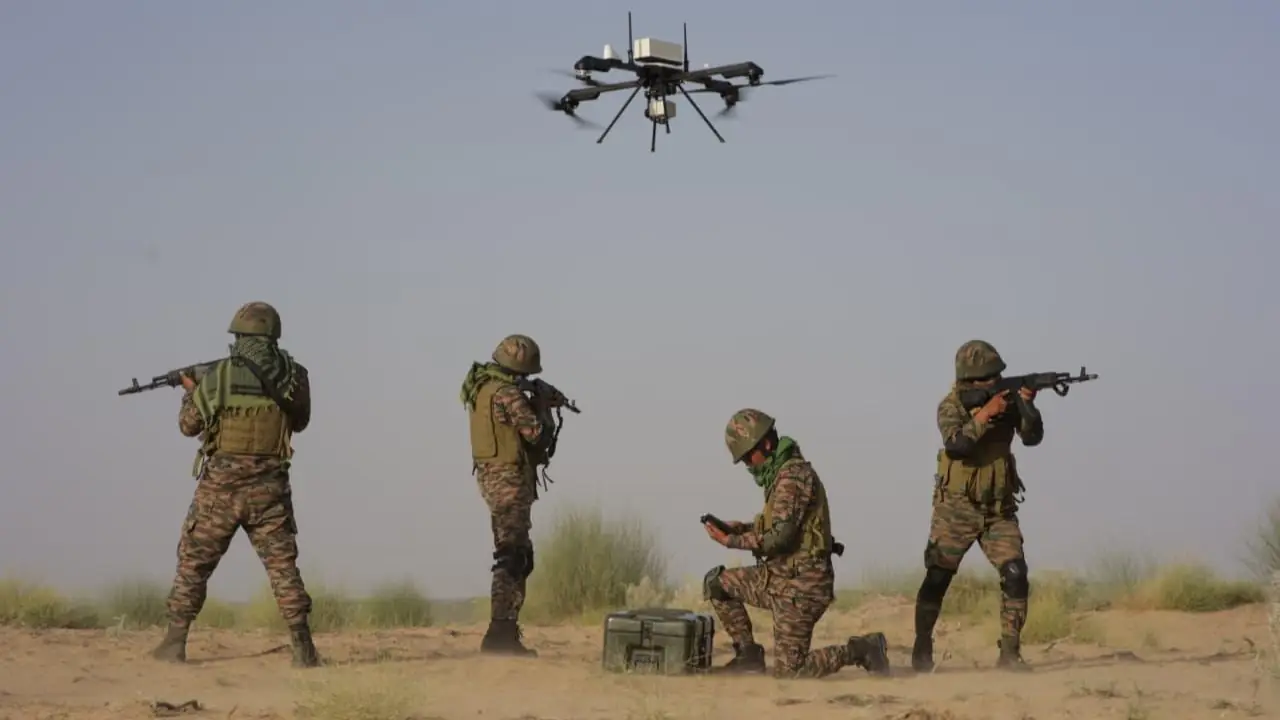
The biannual Army Commanders’ Conference (ACC), which commenced on April 13, 2026, concluded on April 16, bringing together the apex leadership of the Indian Army along with senior government functionaries.
Chaired by the Chief of the Army Staff (COAS), the conference was attended by top military leadership and addressed by key officials including the Cabinet Secretary, Chief of the Defence Staff, Defence Secretary, Chairman of the National Security Advisory Board (NSAB), and the Chief of the Naval Staff. The deliberations were aligned with the Indian Army’s stated vision of evolving into a “Future Ready Force,” with 2026 designated as the year of “Networking and Data Centricity.”
The conference covered a wide spectrum of issues, including modernisation priorities, the infusion of technology in combat operations, doctrinal updates, and training requirements. A significant focus was placed on leveraging networking and data-centric approaches to enhance operational readiness and respond effectively to emerging security challenges.
Senior leadership also reviewed operational capability requirements in light of lessons drawn from Operation Sindoor and ongoing global conflict trends. Particular attention was given to the deployment and integration of Unmanned Aerial Systems (UAS) and Counter-Unmanned Aerial Systems (C-UAS), reflecting their growing importance in modern warfare.
Speakers at the conference highlighted the rapidly evolving geopolitical environment and the complex interplay of global, regional, and internal security dynamics. Drawing from recent international conflicts, they underscored the continued relevance of hard power in safeguarding India’s strategic interests.
There was also emphasis on strengthening coordination between ministries, improving synergy between civil and military institutions, and adopting a whole-of-nation approach to address multifaceted security challenges.
Discussions further pointed to the urgent need to accelerate indigenous defence production. Strengthening domestic manufacturing capabilities was seen as critical to achieving self-reliance and ensuring long-term strategic resilience, especially in the context of ongoing global supply chain disruptions.


Leave a Reply