



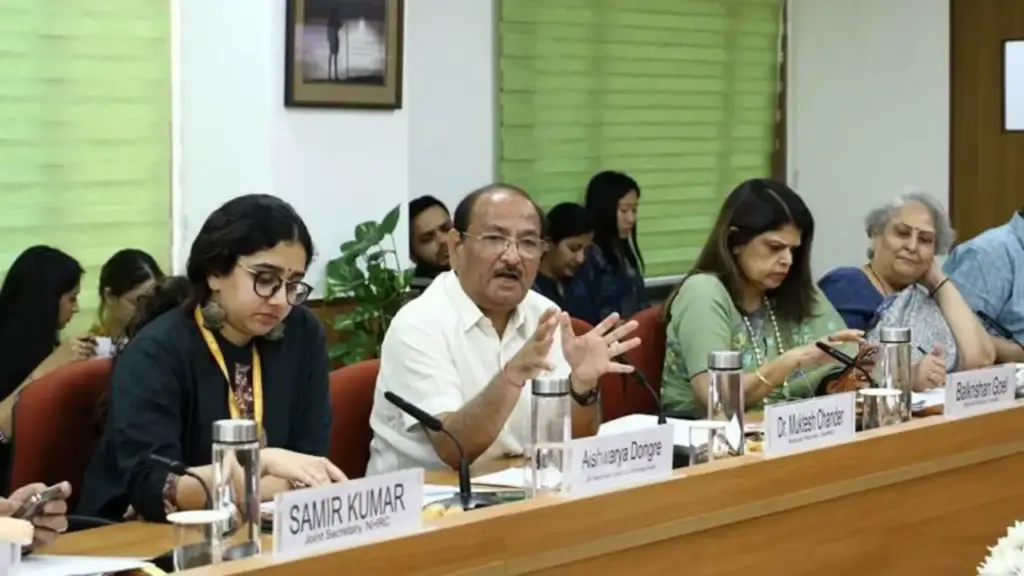
The National Human Rights Commission (NHRC) held an open house discussion in New Delhi on children’s access to social media, with stakeholders largely favouring regulation over an outright ban.
The meeting, chaired by Justice V. Ramasubramanian, brought together government officials, domain experts, civil society representatives and international organisations to examine the risks and benefits of social media use among children.
The discussion comes amid growing concerns among parents, educators and policymakers over excessive screen time, exposure to harmful content and gaps in child protection safeguards online. Participants also noted global developments, including age-based restrictions being considered or implemented in several countries.
Raising key questions, the NHRC chairperson asked whether children’s access should be banned or regulated, who should legislate such measures, and what age thresholds should apply. He said India has strong legal frameworks but faces challenges in implementation, stressing the need for practical and enforceable solutions through a uniform national law.
He also highlighted the lack of focus on “digital discipline” in public discourse, urging experts to suggest ways to improve enforcement and responsible usage.
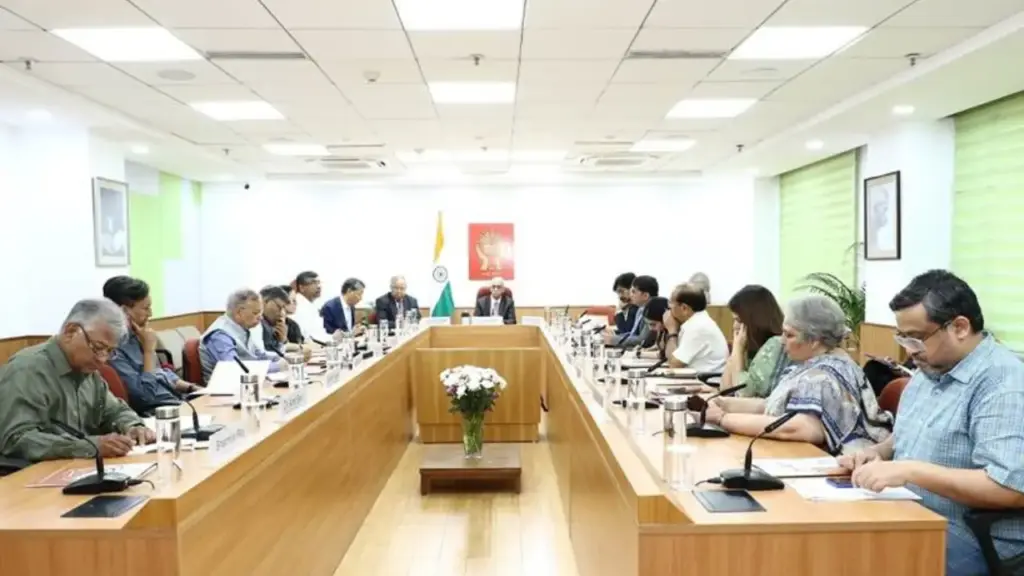
NHRC member Justice (Dr.) Bidyut Ranjan Sarangi said regulating access would be more appropriate than banning it, noting that children should not be deprived of the benefits of technology. He called for a central law to ensure equal protection across regions and socio-economic groups.
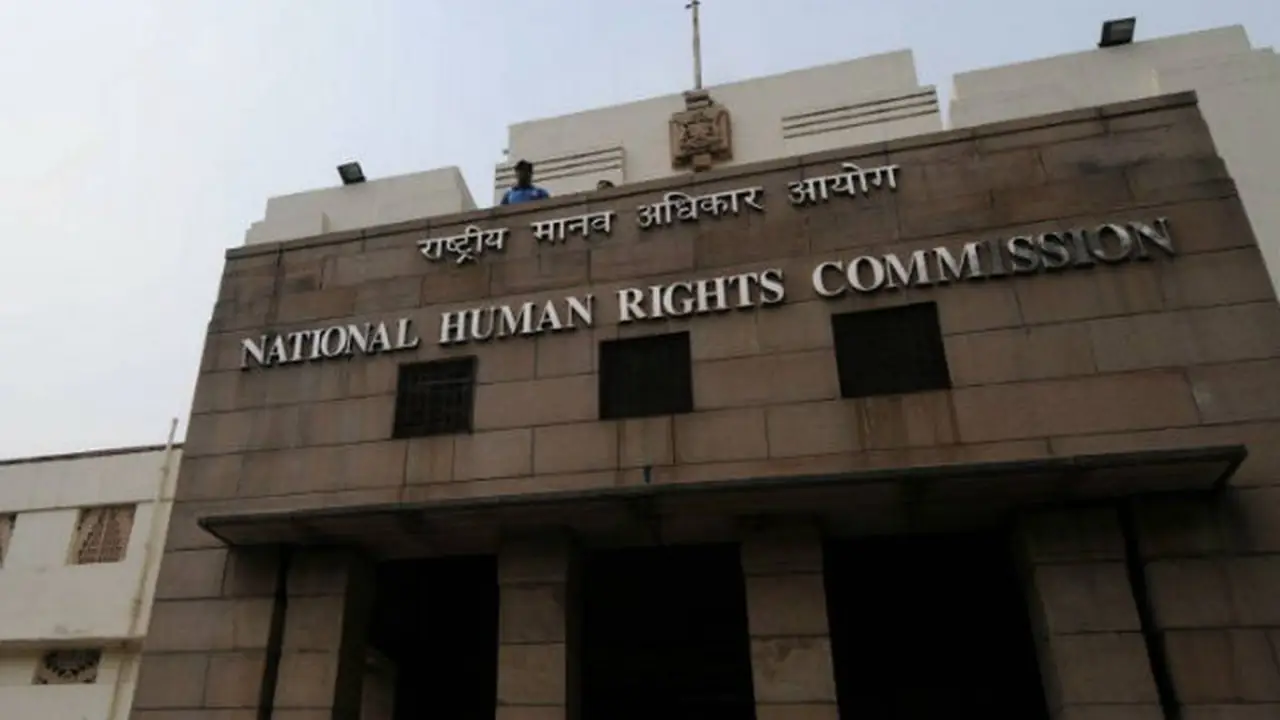

Officials pointed to both the advantages and risks of social media. Data cited during the discussion showed that 76% of children aged 14 to 16 use smartphones to access social media, while 57% use them for educational purposes. Concerns were raised over cyberbullying, data privacy violations, online exploitation and cyber fraud.
The Ministry of Electronics and Information Technology (MeitY) said efforts are underway to strengthen digital regulation, including mandating labelling of synthetically generated content and restricting unlawful posts. Officials stressed the need to balance regulation with access, treating digital connectivity as a public infrastructure.
Experts from child protection bodies, academia and civil society highlighted emerging threats such as inappropriate animated content, the spread of child sexual abuse material and behavioural impacts on children. Suggestions included stronger monitoring of internet gateways, increased awareness among parents and children, and better enforcement mechanisms.
Several participants emphasised that awareness and education should complement legislation. Calls were made for digital literacy programmes in schools, training for law enforcement agencies and improved safety measures on devices and platforms.
Views differed on the extent of restrictions, with some suggesting a ban for children below 13 years and regulated access for older age groups. Others stressed the need for an evidence-based approach that balances children’s rights with safety concerns.
Concerns were also raised about children’s declining emotional well-being, with excessive online engagement linked to reduced empathy and social interaction. Participants underlined the importance of encouraging real-world engagement and promoting responsible digital behaviour.
Among the key suggestions were defining social media clearly, ensuring accountability of platforms and service providers, strengthening legal frameworks, improving transparency in data sharing, and adopting a coordinated national policy with state-level implementation.
The NHRC said it will review the inputs received during the discussion before finalising its recommendations.
Leave a Reply