

Goa, once known as the international vacation destination with it’s pristine beaches and serene villages, is now on the brink of outstripping its soul with buildings and villas mushrooming at breakneck speed. Fuelled by the compelling of need of Indian’s to want what they do not understand, the very idea of Goa and it’s “Susegad’ culture is being ground into the sand by a second colonisation by people fleeing a Noxious Climate Region of their own making.
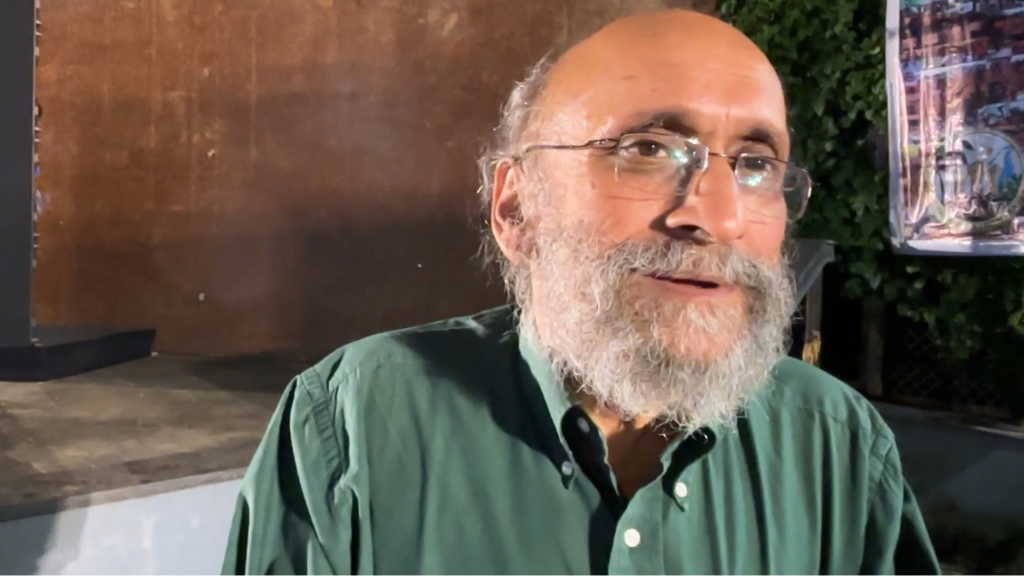
“Don’t make Goa, like the place I come from, which is the national capital region (NCR) of India. People are choking. It’s the most polluted part of India and one of the most polluted parts of the world. You should not allow that to happen for the future of your children and your grandchildren.” veteran journalist Paranjoy Guha Thakurta, told HiveJaw in an exclusive chat.
Thakurta’s presence in Goa was not without purpose.
The 70-year-old, whose impressive CV reads: author, publisher and documentary filmmaker, was an invitee on the occasion of the 10th anniversary of the martyrdom of Father Bismarck Dias, who was known for his activism to save Goa from crony capitalists.
“I was asked to speak on the occasion of the 10th anniversary of the martyrdom of Father Bismarck at the Menezes Braganza Hall. His supporters, Sudhir Dalvi, Albertina Miranda, asked me to come from Delhi to deliver a talk, which looked at crony capitalism and what activists should do, how do you build resistance to crony capitalism.” he said.
Thakurta, counted among a handful of journalists with a spine and the courage to hold authorities accountable, was the only one who questioned the Election Commission of India at a press conference in August. The press briefing addressed issues over the Bihar Special Intensive Revision (SIR) and the ‘vote chori’ controversy unearthed by Leader of Opposition Rahul Gandhi.
“Nobody can say that the electoral rolls of this country do not need to be revised or improved or made pure to remove the names of people who are not eligible to vote. Remove the names of dead people,” Thakurta explained, when asked about the latest SIR that is being conducted across states.
“But the way it has been done, in Bihar in particular, means that the Election Commission of India (ECI) is not doing it in a manner that ensures the integrity of the election process. A SIR, which should have taken months, six to eight months or even longer, was thought to be done in a few months. Suddenly you decided you would do it and then because of the Supreme Court you were forced to make public 65 lakh names that were deleted,” Thakurta said.
“Now if you compare the Bihar voter roll that was there in January of 2025 and the final roll, there are still about 47 lakh names which are not there. So there are inadequacies in our voting system, in our electoral system which have not been addressed by the Election Commission of India.
“The ECI is a constitutional authority. The people of this country have faith in it. But I think in the recent past the way in which the ECI has been working, gives an indication that it is partisan. It is working in favour of the ruling dispensation and not in a truly independent and autonomous manner.
And one of the ways it has been done is through the implementation of the SIR. In a way it seems to many people that you are trying to bring in through the back door the NRC, the National Register of Citizens and the CAA, the Citizenship Amendment Act. Now, I think the government is not transparent, the government’s intentions are not clear and the Election Commission of India needs to act in a transparent manner,” Thakurta elaborated.
Given that today, decisions in India are guided more by political expediency rather than actual scientific reasoning, Thakurta explained why the phenomenon is ‘not new’.
“Whoever is in power will act in a manner that suits their political interests. The more important question is, ‘is this helping the people of this country?’,” he stated.
“You can argue that the Bharatiya Janata Party on its own, not the NDA, got roughly 32% of the vote in 2014. That went up to around 38% in 2019 and in 2024 came down to 36%. But the number of seats in the Lok Sabha which the BJP got came down from 303 to 240. Far from being ‘400 paar’, about 400. So in a sense we have returned to an era where the government in power has to depend on coalition partners for a majority. Because the BJP on its own is 32 short of a majority in the Lok Sabha.
“We also see the Indian National Congress, which only had 55 seats in 2019, now has 99 seats. So in a sense after 2024 there has been a change and I can say without any fear of contradiction, Modi 3.0 is different from Modi 2.0 and Modi 1.0. So, politics is part of our life and everything revolves around it. And the question is, politicians can be held accountable and answerable for their actions if people, if ordinary people put pressure on them,” he elaborated.
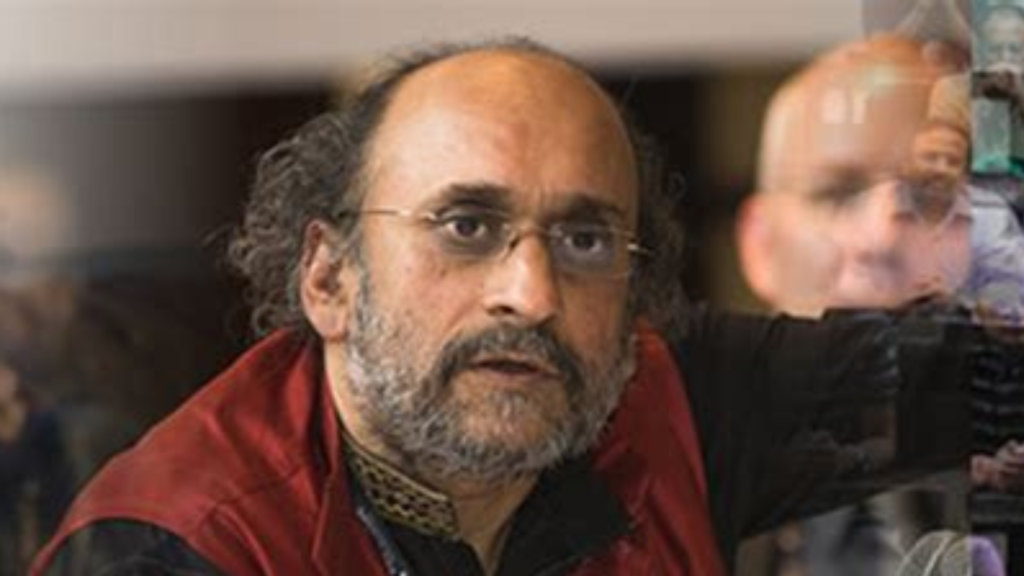
For 48 years and counting, Thakurta has been fearlessly telling stories of the Indian economy and policies. Since 2015, he has been writing about the Adani Group and how it unfairly benefitted from a change in rules for power plants in Special Economic Zones among other illegalities.
In 2017, Adani filed a series of defamation cases against Thakurta, yet he remains courageous.
“It’s a very difficult task but you mustn’t give up,” he said when asked how independent journalists and smaller media outlets like HiveJaw can collaborate to challenge the narratives which are driven by powerful political and corporate entities.
“Today, like so many other institutions and not just the Election Commission of India, we look at the defence services, we look at the bureaucracy, we look at the military, we look at so many other institutions, the media too. Such a large section of the media has become subservient. To use Ravish Kumar’s favourite phrase, they have become the ‘Godi Media’. They are not watchdogs, they are lap dogs. And they are lap dogs to those who are in power and authority. And therefore the media fails to play the role that is meant for the media, the fourth estate in a democracy, that is to ask questions,” Thakurta added.
“And Prime Minister Narendra Modi happens to be the first and the only Prime Minister of India who till date, over the last 11 and a half years and longer, has not held a single spontaneous press conference where anybody could ask anything. He’s picked and chosen the people he wants to give interviews to, he’s given interviews to actors who’ve asked him questions about how he likes to eat a mango. But the point is, for the first time, we have a Prime Minister of India who’s never held a spontaneous press conference. This sends a message down the line. And I think all independent journalists, including you, have to challenge the present situation.
“We are dependent on monopolies like YouTube, like Instagram, like Twitter, now known as X. And if we are dependent on them, they control the narrative to a great extent. But the real challenge is to hold the independent, hold truth to power, hold accountable those who are in positions of power. Otherwise we don’t really have democracy,” he signed off.
Leave a Reply