



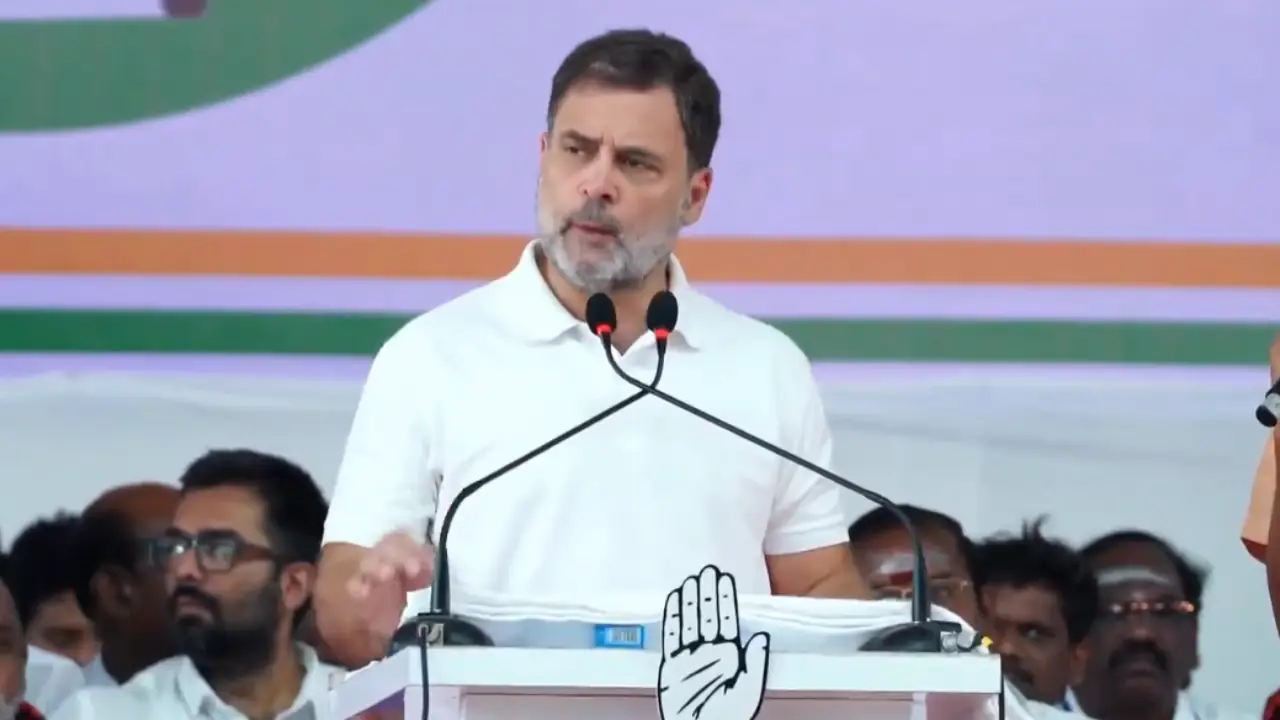
Congress MP Rahul Gandhi on Monday raised concerns over the delimitation process linked to the implementation of 33 per cent reservation for women in the Lok Sabha and state legislatures.
Sharing an opinion piece, Congress Parliamentary Party (CPP) Chairperson Sonia Gandhi and Rahul Gandhi highlighted what they described as “risks and inequities” arising from a “rushed delimitation.”
“Any delimitation involving an increase in the strength of the Lok Sabha must be politically, and not just arithmetically equitable. Congress Parliamentary Party Chairperson Sonia Gandhi ji writes about how the real concern in the important process of women’s reservation are the risks and inequities posed by a rushed delimitation,” Rahul Gandhi wrote on X.
Congress MP Manish Tewari also criticised the process, calling it an “arbitrary process for overturning settled principles.”
“The Hon’ble Chairperson of the Congress Parliamentary Party and the pioneer of Women’s Reservation in Parliament and Legislative Assemblies, Sonia Gandhi, is absolutely prescient. The issue on April 16, 2026, is not women’s reservation. It is arbitrary delimitation overturning all settled principles & processes since 1935,” Tewari said.
“Any delimitation involving an increase in the strength of the Lok Sabha must be politically, and not just arithmetically equitable.”
— Rahul Gandhi (@RahulGandhi) April 13, 2026
Congress Parliamentary Party Chairperson Sonia Gandhi ji writes about how the real concern in the important process of women’s reservation are… pic.twitter.com/y9JARS8bRU
In her opinion piece, Sonia Gandhi referred to the proposed delimitation exercise to increase the number of Lok Sabha seats as an “assault on the Constitution.” She also questioned the timing of the amendment linked to the Nari Shakti Vandan Adhiniyam.
She stated that the Opposition had repeatedly sought an all-party meeting to discuss the proposals, but the request was declined.
“Opposition leaders have written to the government not once but thrice requesting that an all-party meeting be convened after the last phase of elections is over in West Bengal on April 29, to discuss what the new proposals of the government are. But that perfectly reasonable request has been turned down. Instead, the Prime Minister has resorted to writing op-eds, making appeals to political parties, and organising sammelans. It is an underhand tactic that reflects the Prime Minister’s one-upmanship and his ‘my way or the highway’ approach to decision-making,” Sonia Gandhi wrote.
She clarified that the Opposition supports the reservation of 33 per cent seats for women but opposes carrying out delimitation before the next census.
Sonia Gandhi also warned that conducting delimitation based on “unofficially available” data would be “extremely dangerous.”
“The monsoon session of Parliament will begin in mid-July. The heavens will not fall if the government were to call an all-party meeting after April 29 to discuss its proposals with the Opposition, allowing time for a public debate, and then have the Constitution Amendment Bills considered in the monsoon session. There is simply no justification, except narrative management during troubled times, for this tearing hurry to bulldoze extremely far-reaching changes to our polity. The process is deeply flawed and anti-democratic. Reservation for women is not the issue here. That has already been settled. The real issue is delimitation, which, based on the information unofficially available, is extremely dangerous and an assault on the Constitution itself,” she added.
The Parliament is scheduled to meet for a three-day special session from April 16 to 18, where the Amendment Bill to the Nari Shakti Vandan Adhiniyam, 2023, is expected to be taken up.
The Act links women’s reservation to a fresh census and subsequent delimitation exercise. However, due to delays in conducting the census, the government is considering proceeding using 2011 census data.
The proposed changes could increase the number of Lok Sabha seats from 543 to 816. Concerns over delimitation have been raised particularly by southern states, where leaders have warned that their representation could shrink due to population disparities with northern states.
Chief Ministers from Tamil Nadu, Kerala, Telangana and Karnataka have flagged these concerns, pointing to potential shifts in political representation.
The government is expected to introduce two key constitutional amendments, including a separate Delimitation Bill. Both will be required to enable the implementation of women’s reservation.
Under the current framework, there is no provision for OBC reservation within the women’s quota, while existing reservations for SC and ST communities will continue.
Leave a Reply