



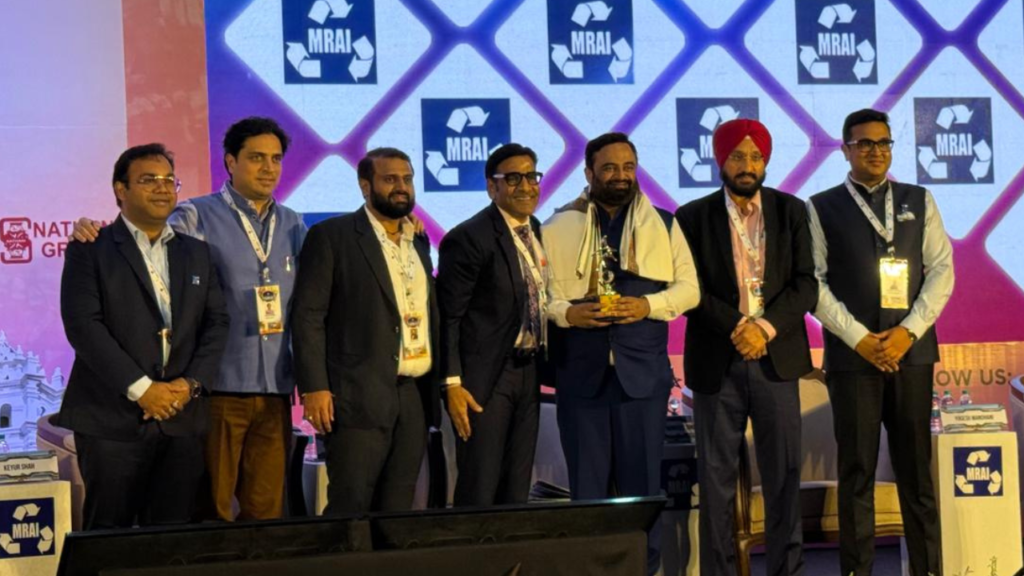
The MRAI Sustainable Steel Conference 2025 (MSSC 2025) wrapped up in Goa after two days of dialogue and policy-driven discussion aimed at steering India’s steel industry toward a low-carbon future.
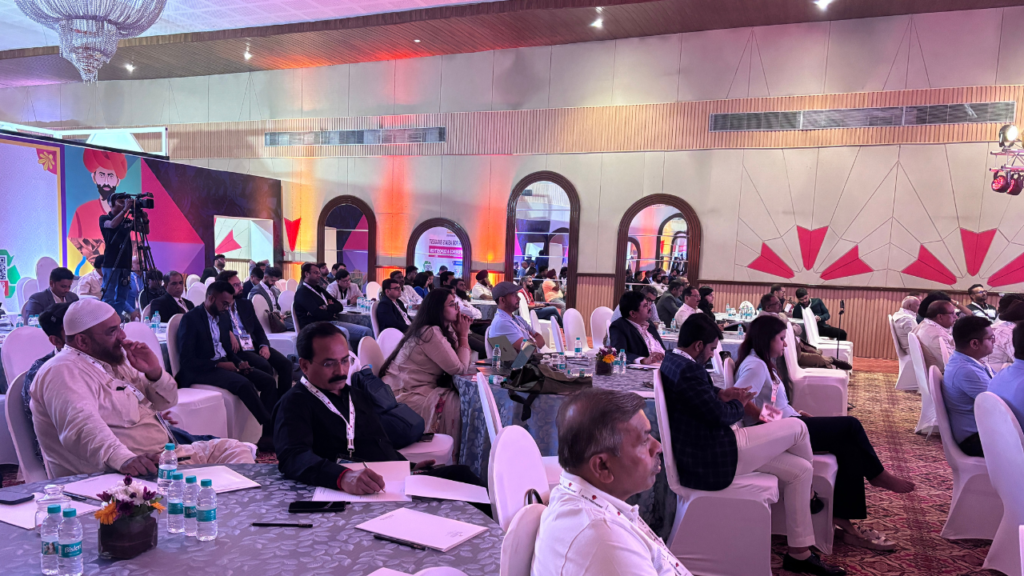
Hosted by the Material Recycling Association of India (MRAI) at ITC Grand Goa, Arossim, and supported by the Ministry of Steel and the National Institute of Secondary Steel Technology (NISST), the event drew more than 300 delegates — including steelmakers, recyclers, policymakers and sustainability experts — making it Goa’s first major ferrous-focused steel and recycling conference.
Under the theme “Green Steel and Sustainable Growth,” MSSC 2025 underscored India’s roadmap for achieving 300 million tonnes of sustainable steel production by 2030. The discussions, led by senior government officials and industry leaders, called for stronger collaboration between the public and private sectors to accelerate decarbonisation, recycling, and the adoption of green hydrogen technologies.
A Platform for Policy and Innovation
MRAI Vice President Zain Nathani opened the conference by emphasizing that the conversations launched in Goa would “shape the next decade for India’s steel industry,” influencing standards, decarbonisation, and innovation.
Keyur Shah, Managing Director of Mono Steel (India) Ltd. and MRAI Board Director, highlighted MRAI’s evolution from 45 members to a 1,800-strong network of recyclers across multiple sectors. He credited policy wins such as zero import duty on ferrous scrap and the national vehicle scrappage policy, while announcing MRAI’s plans for circular recycling parks and skill development initiatives nationwide.
Yogesh Mandhani, President of the All India Induction Furnace Association, reaffirmed industry alignment with the government’s green steel mission. “Seventeen companies have already received NISST’s Green Steel Certificates,” he noted, adding that achieving sustainability targets would require consistent industry–government collaboration.

Government Endorsement and the Green Steel Framework
V. K. Tripathi, Joint Secretary – Steel, Government of India, in his virtual address, underscored the urgency of India’s green transition.
“Our short-term focus is on energy efficiency, the medium-term on green hydrogen and carbon capture, and our long-term goal is achieving net-zero emission steelmaking by 2070,” he said.
Parmjeet Singh, Director of NISST, elaborated on the implementation of India’s Green Steel Taxonomy, notified in December 2024, defining the framework for low-carbon steel classification. He pointed out that nearly half of India’s steel capacity stems from the secondary sector, where ferrous scrap plays a key sustainability role.
BIS Standards and Green Procurement
Technical sessions addressed industry standards and market readiness. In the session moderated by Amar Singh, Secretary General, MRAI, Dwaipayan Bhadra, Director at the Bureau of Indian Standards (BIS), stressed inclusivity in standard-setting, noting that “BIS is not a regulator but a collaborative body.”
A second session on “Green Steel Market, Procurement and Policy Initiatives,” moderated by Abhijit Kulkarni of EY–Parthenon India, examined how financing mechanisms and policy frameworks could foster green steel adoption.
“There can be no green steel without supportive policy and financial incentives,” Kulkarni said.
Panellists from CII, RMI India Foundation, Toyota Kirloskar Motor, and Metalogic PMS discussed pathways for MSMEs to engage in green procurement and benefit from concessional financing mechanisms.
Charting the Road Ahead
Sanjay Mehta, President, MRAI, praised the Ministry of Steel for its continued support and outlined plans for sector-specific conferences focusing on ferrous and non-ferrous segments.
“Through such summits, we exchange ideas, understand trends, and drive India’s sustainability vision,” Mehta said.
The conference brought together policymakers and industry leaders against Goa’s coastal backdrop — signalling the state’s emergence as a venue for national dialogue on sustainable industry.
Leave a Reply