


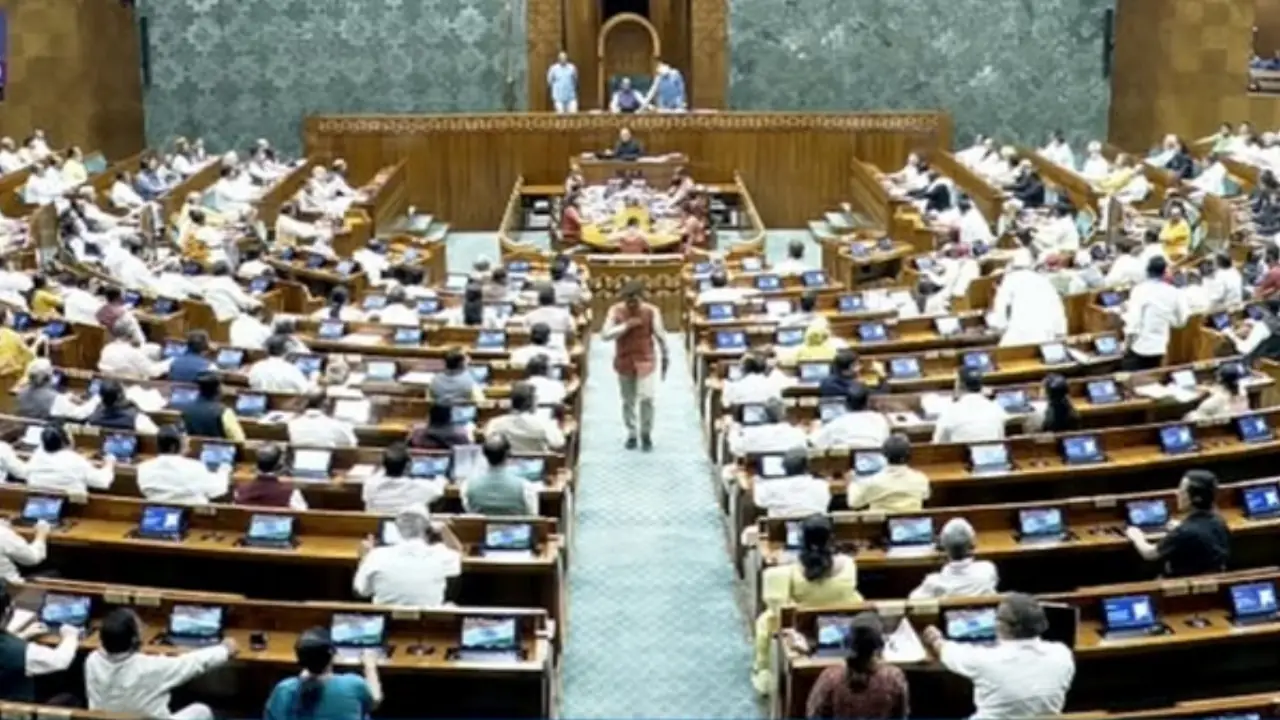
The Constitution Amendment Bill aimed at implementing women’s reservation from the 2029 general elections was defeated in the Lok Sabha on Friday after failing to secure the required two-thirds majority.
In the division following a marathon debate, 298 members voted in favour of the bill, while 230 voted against it. A Constitution Amendment Bill requires the support of not less than two-thirds of members present and voting to pass.
Lok Sabha Speaker Om Birla announced the outcome, stating, “The Constitution (131st Amendment) Amendment Bill did not pass as it did not achieve a 2/3 majority during voting in the House.”
The House had resumed discussion on three key legislations — the Constitution (One Hundred and Thirty-First Amendment) Bill, 2026, the Union Territories Laws (Amendment) Bill, 2026, and the Delimitation Bill, 2026.

Following the defeat of the Constitution Amendment Bill, Parliamentary Affairs Minister Kiren Rijiju said the government would not proceed with the remaining two bills.
While motions for introducing Constitution Amendment Bills require only a simple majority, the passage of effective clauses and final approval demands both a majority of the total membership and a two-thirds majority of members present and voting. Additionally, amendments impacting key constitutional provisions must be ratified by at least half of the state legislatures after parliamentary approval.
Earlier, Union Home Minister Amit Shah responded to the debate, criticising opposition parties for opposing the bill. He said that when elections are held next, “they will face the wrath of women.”
Opposition parties, however, strongly objected to the Delimitation Bill, arguing that women’s reservation should be implemented immediately within the existing strength of the Lok Sabha. They reiterated their support for women’s reservation but opposed linking it to delimitation.
During the debate, Congress leader Rahul Gandhi criticised the government’s approach, stating that the Delimitation Bill has “nothing to do with the empowerment of women” and is instead “an attempt to change the electoral map of India.”
Nearly 130 members participated in the discussion before the voting took place.
Leave a Reply